

What to Wear When Whale Watching: Your Complete Winter vs. Summer Packing Guide
What to wear when whale watching in winter vs summer. Pack right.
What to wear when whale watching

What to wear when whale watching depends heavily on the season. In winter, layer up with thermal base layers, a waterproof jacket, insulated pants, and non-slip boots. In summer, go with lightweight moisture-wicking shirts, a light windbreaker, sun-protective clothing, and comfortable deck shoes. Always bring sunglasses, sunscreen, and a hat year-round.
There's nothing quite like standing on the deck of a boat, salt air hitting your face, and suddenly a massive humpback breaches fifty feet away. Your jaw drops. Your camera fumbles. And then you notice... you're absolutely freezing. Or sweating through your shirt. Or your shoes are soaked.
Yeah. Knowing what to wear when whale watching can genuinely make or break the experience.
I've talked to enough first-timers who showed up in jeans and sneakers to know this is a real problem. Dressing wrong doesn't just make you uncomfortable it can make you miserable enough to miss the very moments you paid good money to see. So let's fix that, season by season.
Why What You Wear on a Whale Watch Matters More Than You Think
Out on open water, conditions change fast. Even a sunny July morning in Monterey Bay can turn breezy and cold the moment you clear the harbor. And a calm December day off the coast of Massachusetts? Don't let it fool you windchill on the water hits different.
The ocean doesn't care what season it is on land. Wind, spray, and sun reflection off the water create a microclimate all their own. Knowing what to wear when whale watching means understanding that environment, not just checking the weather app before you leave the hotel.
What to Wear When Whale Watching in Winter
Winter whale watching is spectacular gray whales migrating along the California coast, humpbacks in Hawaii, orcas in the Pacific Northwest. But cold air, chop, and ocean spray make staying warm your number one job.
Start with a thermal base layer. Merino wool or synthetic moisture-wicking fabric works best. Skip cotton entirely it absorbs moisture and holds it against your skin, which is basically a recipe for misery. A good base layer keeps your core temperature stable even when spray hits your jacket.
Add a mid-layer for insulation. A fleece pullover or a down vest traps body heat. This is the layer you might strip off if conditions warm up mid-trip, so make it easy to remove.
Top it off with a waterproof, windproof outer shell. This is non-negotiable in winter. Your jacket should be fully waterproof not just water-resistant with sealed seams. Brands like Helly Hansen, Patagonia, and Columbia make great options. Look for something with adjustable cuffs and a hood, because ocean spray has a way of finding every gap.
For your legs: Insulated, water-resistant pants or thermal leggings under waterproof over-pants. Jeans are the worst choice you can make they get wet, stay wet, and sap heat from your legs the entire trip.
Footwear matters enormously. Non-slip rubber-soled boots or deck shoes with good grip are essential. Wet boat decks are slippery, and ankle support goes a long way on choppy winter water. Waterproof hiking boots with wool socks work well too.
Don't forget your extremities. A warm beanie or fleece-lined hat that covers your ears. Waterproof gloves or mittens your fingers go numb faster than you expect when you're gripping a railing in 35-degree windchill. A neck gaiter or scarf adds serious warmth without taking up much bag space.
Merino wool or synthetic base layer (top and bottom)
Fleece or down mid-layer
Waterproof, windproof outer jacket with hood
Waterproof over-pants or insulated pants
Waterproof boots with non-slip soles wool socks
Beanie or fleece-lined hat
Waterproof gloves or mittens
Neck gaiter or scarf
Sunglasses (UV protection winter sun reflects hard off water)
Sunscreen (yes, even in winter)
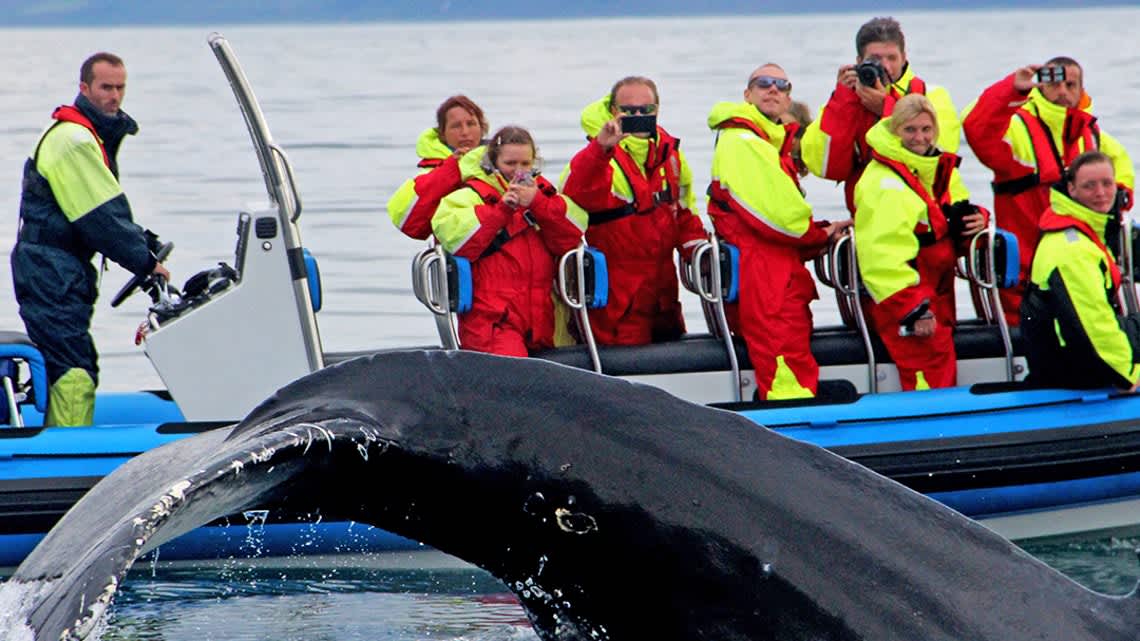 What to wear when whale watching
What to Wear When Whale Watching in Summer
Summer whale watching off places like Bar Harbor, Maine, the San Juan Islands, or the coasts of Alaska is stunning. But long hours in the sun on open water with rays bouncing off every wave will cook you if you're not careful. Sunburn happens faster on the water than almost anywhere else.
Lightweight, moisture-wicking shirts are your foundation. Look for UPF 30 or higher sun-protective fabric if you're going to be on deck for several hours. A long-sleeved UPF shirt is actually smarter than a tank top in midsummer, because it protects your arms without you having to reapply sunscreen every hour.
Light pants or convertible zip-off pants beat shorts for anyone spending extended time on deck. They protect your legs from sun and wind, and the "zip-off to shorts" convertible style is genuinely useful when you board in morning cool and end up in afternoon heat.
A light windbreaker is still non-negotiable. Even in August. Even in Southern California. The moment the boat picks up speed or moves into open water, the wind will make a 75-degree day feel like 55. Stuff a packable windbreaker in your bag and you'll thank yourself later.
Summer footwear: Boat shoes or non-slip deck shoes are ideal. Sandals aren't a great idea whale watching boats get wet decks, and flip-flops are a safety issue. Lightweight sneakers with decent grip work in a pinch.
Hat and sunglasses are absolutely mandatory. A wide-brim hat protects your face, ears, and the back of your neck. Polarized sunglasses cut the glare off the water dramatically they also help you spot whale activity, since you can actually see beneath the surface glare.
Sunscreen: apply before you board. SPF 50 or higher, broad-spectrum. The combination of direct sun plus reflected UV from the water is intense. Reapply every 90 minutes if you're staying on deck.
UPF-rated long-sleeve shirt or light tee
Light pants or convertible zip-off pants
Packable windbreaker
Non-slip deck shoes or boat shoes
Wide-brim hat
Polarized sunglasses
Sunscreen SPF 50 (apply and reapply)
Light layer for the ride back (temperatures drop in the evening)
Small dry bag for your phone and camera
What to Wear When Whale Watching: The Year-Round Essentials
Some things belong in your bag no matter what month it is.
Polarized sunglasses aren't just comfort they help you see into the water. Watching whale behavior is completely different through polarized lenses. Worth every penny.
A dry bag or waterproof phone case. Ocean spray happens. A $15 dry bag protects your phone, camera, and wallet without any drama.
Motion sickness remedies and a change of clothes. Not clothing exactly, but if you get seasick, having a dry shirt in a bag is a genuine relief.
A small backpack or crossbody bag keeps your hands free on deck which matters when you're trying to photograph a breaching whale and also hold onto a railing.
Common Whale Watching Clothing Mistakes to Avoid
Wearing only cotton. Cotton is warm and comfortable on land. On a boat, it absorbs moisture and becomes cold and heavy. Swap it out.
Skipping the windbreaker in summer. So many people do this. They show up in a t-shirt on a beautiful July day and spend half the trip hiding below deck because they're cold. Pack the windbreaker.
Wearing new or uncomfortable shoes. A whale watching trip is not the time to break in new footwear. Wear something with decent grip that you've worn before.
Overdressing in winter without layers. Some people pile on one massive thick coat and can't adjust when the sun comes out and the wind dies. Layering lets you regulate.
Forgetting sun protection in winter. UV rays reflect off water intensely in every season. Winter sunburn on the water is very real.
Dressing for Specific Whale Watching Destinations
Monterey Bay, California (Year-Round): The fog and marine layer make mornings cold even in summer. Always bring layers and a windbreaker. In winter, full waterproof gear is appropriate.
Cape Cod and Stellwagen Bank, Massachusetts (April–October): Spring and fall trips here are chilly — dress like you would for a winter trip until July. Summer days can be warm, but sea spray keeps things cool.
San Juan Islands, Washington (Year-Round): This region runs cool even in summer. A waterproof jacket is almost always appropriate here.
Hawaii (Winter, December–April): This is the most forgiving environment. Light clothing with a thin long-sleeve layer and sun protection is usually enough, though early-morning trips can be cooler than expected.
Alaska (Summer, May–September): Don't let the "summer" label fool you. Alaska whale watching is cold by most standards. Dress like a Pacific Northwest winter trip even in July.
A Quick Word on Kids' Clothing for Whale Watching
If you're bringing children, the same rules apply with emphasis on warmth and layers, because kids lose body heat faster. Attach their hats with chin straps so the wind doesn't claim them. Skip the flip-flops entirely. And a life-vest-compatible outer layer is worth looking for if your tour provides life jackets for kids.
Final Thoughts Before You Board
Knowing what to wear when whale watching is really just knowing how to respect the ocean environment. It doesn't care about your fashion preferences. It will be windy when you don't expect it, wet when you're not ready, and blazing hot the moment you overdress.
The best whale watching experiences happen when you're comfortable enough to stay on deck, eyes on the water, fully present not retreating below because you're cold, sunburned, or soaked. Dress smart, pack layers, protect yourself from sun and spray, and then forget about all of it. Because when a 40-ton humpback launches itself out of the water 30 feet from your boat, you want every single bit of your attention on that moment.
That's what you're there for.