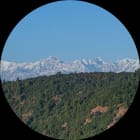

Scenic Himalayan View from Kunjapuri Temple: Which Peaks Are Visible?
Complete Guide to the Himalayan Peaks Visible from Kunjapuri Temple and the Scenic Sunrise Experience from the Kunjapuri
Image Credit : Himalayan dream treks

Scenic Himalayan View from Kunjapuri Temple: Which Peaks Are Visible?
If you stand at Kunjapuri Temple in the early morning, you do not just watch a sunrise. You watch the Himalayas slowly reveal themselves. Snow peaks turn golden. Clouds move below you. The air feels clean and sharp.
Located near Rishikesh in Uttarakhand, Kunjapuri Temple sits at an altitude of around 1,676 meters. It forms part of the revered Shakti Peeth circuit in the region. But beyond its spiritual value, travelers visit this hilltop for one major reason: the panoramic Himalayan view.
So which peaks can you actually see from Kunjapuri Temple? Let us break it down clearly, using real geographic references and verified Himalayan peak data.
Why Kunjapuri Temple Offers Such a Clear Himalayan View
Kunjapuri Temple stands above the town of Narendra Nagar, away from urban pollution and heavy construction. Its elevation, around 1,676 meters, opens up a wide northern horizon. On clear days, the snow-covered peaks of the Garhwal Himalayas appear sharp and well defined.
The temple faces north and northeast. That direction aligns perfectly with several major and minor Himalayan peaks across the Garhwal region. Weather plays a major role here. October to April usually offers the best visibility because monsoon clouds clear out and winter air stays dry and crisp.
Many travelers combine the scenic viewpoint with the popular Kunjapuri Temple trek, which starts from villages near Narendra Nagar or from Hindolakhal also as tapovan. The trek remains short and beginner friendly, yet it gradually gains elevation and opens up wider views as you climb. By the time you reach the temple steps, you already feel the landscape expanding around you.
Chaukhamba Peak
Among all visible summits, Chaukhamba stands out clearly.
Chaukhamba rises to about 7,138 meters. It forms part of the Gangotri group of peaks. The name Chaukhamba means “four pillars,” which reflects its four prominent summits.
From Kunjapuri Temple, Chaukhamba appears massive and wide. It often dominates the skyline because of its height and bulk. On bright mornings, sunlight touches its snow walls first, turning them orange and gold.
Mountaineers consider Chaukhamba one of the significant technical climbs in the Garhwal Himalayas. Its visibility from Kunjapuri confirms the temple’s strategic viewing location.
 Chaukhamba Peak
Shivling Peak
One of the most dramatic peaks visible from Kunjapuri is Shivling.
Shivling stands at approximately 6,543 meters near the source of the Ganga in the Gangotri region. Climbers often call it the “Matterhorn of India” because of its sharp pyramid shape.
From Kunjapuri, Shivling looks pointed and elegant. It does not spread wide like Chaukhamba. Instead, it rises sharply into the sky. When light hits its summit, it creates a glowing triangular silhouette.
Shivling lies near Gangotri, one of the four Char Dham pilgrimage sites. Its religious and mountaineering importance adds depth to the scenic view.
Kedarnath Peak
Kedarnath Peak also becomes visible on a clear day.
Kedarnath reaches around 6,940 meters. It stands near the sacred town of Kedarnath Temple.
This peak forms part of the Kedarnath massif. Unlike Shivling’s sharp shape, Kedarnath Peak appears broader and heavily snow-covered. It carries glaciers along its slopes, which reflect sunlight beautifully.
When you view Kedarnath Peak from Kunjapuri Temple, you see a part of the larger Himalayan wall that guards the Kedarnath valley. Pilgrims often feel a strong spiritual connection when they identify this peak in the distance.
Gangotri I Peak
Gangotri I belongs to the famous Gangotri group.
Gangotri I rises to about 6,672 meters. It stands close to the Gangotri Glacier system, one of the primary sources of the River Ganga.
From Kunjapuri Temple, Gangotri I appears among clustered peaks in the far distance. You may not identify it instantly unless the sky remains crystal clear. However, experienced trekkers and local guides often point it out during winter mornings.
Gangotri I plays a significant role in Himalayan mountaineering history. Several expeditions have attempted technical routes on its icy slopes.
 Gangotri Peak
Jogin I Peak
Jogin I, sometimes spelled Jogni I, forms part of the Jogin group near the Gangotri region.
Jogin I reaches approximately 6,465 meters. It stands close to Shivling and other Gangotri peaks.
From Kunjapuri, Jogin I may appear slightly behind or beside larger formations depending on atmospheric clarity. It does not dominate the skyline, but it contributes to the layered Himalayan backdrop.
Its snow ridges add depth to the mountain range visible from the temple.
Chaundiar Peak
Chaundiar Peak remains lesser known compared to Chaukhamba or Shivling. However, it forms part of the extended Garhwal Himalayan range.
Although it does not reach the same height as the major summits, Chaundiar adds structure to the horizon line visible from Kunjapuri Temple. On bright winter mornings, you may notice it among the mid-range snow formations.
Its presence proves how wide the viewing angle from Kunjapuri actually stretches.
Jaloni Peak
Jaloni Peak belongs to the broader Garhwal mountain system. It does not attract as much mountaineering attention as Chaukhamba or Shivling, yet it contributes to the panoramic skyline.
From Kunjapuri Temple, Jaloni appears as part of the layered snow range extending across the northeast horizon. Clear air conditions help you distinguish it from neighboring summits.
These smaller peaks often create the illusion of an endless Himalayan wall, which makes the sunrise experience feel grand.
Best Time to See These Peaks Clearly
Visibility depends heavily on season and timing.
October to March offers the best chances. Post-monsoon months clear the dust from the air. Winter reduces humidity levels. Both factors improve long-distance mountain visibility.
You should reach the temple before sunrise. Early morning light enhances contrast and reduces atmospheric distortion. After 9 AM, haze often increases, especially during warmer months.
Avoid peak monsoon season from July to September. Thick clouds usually block the Himalayan range completely.
How Far Are These Peaks from Kunjapuri Temple?
Most of these visible peaks lie between 80 and 150 kilometers away in straight-line distance. Despite that distance, their massive height allows them to remain visible.
For example:
Chaukhamba exceeds 7,000 meters.
Kedarnath Peak approaches 7,000 meters.
Shivling rises above 6,500 meters.
Such elevations make them stand above surrounding ridges. On a clear day, human eyes can easily detect snow-capped summits at those distances.
Why This View Matters for Travelers
People often ask, “Is the sunrise from Kunjapuri Temple really worth waking up at 4 AM?”
Yes. It absolutely is.
You witness:
A 180-degree Himalayan panorama
Snow peaks glowing in early light
Peaceful surroundings without city noise
A spiritual setting combined with natural beauty
Unlike crowded hill stations, Kunjapuri still feels raw and calm. You do not need advanced trekking skills. A short drive from Rishikesh takes you near the top, followed by a staircase climb to the temple.
Spiritual and Geographic Significance Together
Kunjapuri Temple holds religious importance as one of the 52 Shakti Peeths according to Hindu tradition. Devotees believe that part of Goddess Sati fell here.
When spirituality meets geography, the experience deepens. You stand at a sacred site while observing peaks linked to major pilgrimage centers like Gangotri and Kedarnath.
That combination makes the scenic Himalayan view from Kunjapuri Temple unique. It is not just a mountain viewpoint. It is a cultural and natural intersection.
Practical Tips for Visitors
If you plan to enjoy the Himalayan view, follow these simple steps:
Check weather forecasts for clear skies.
Start early from Rishikesh or Narendra Nagar.
Carry warm clothing during winter months.
Bring binoculars if you want to identify specific peaks.
Avoid visiting during heavy fog or monsoon season.
Local guides sometimes help identify peaks accurately. If you love geography, you will enjoy mapping each summit.
Final Thoughts
The scenic Himalayan view from Kunjapuri Temple includes major peaks such as Chaukhamba, Shivling, Kedarnath Peak, Gangotri I, Jogin I, along with Chaundiar and Jaloni.
Each peak adds a layer to the skyline. Some dominate boldly. Others quietly support the mountain wall. Together, they create a breathtaking panorama of the Garhwal Himalayas.
On a clear morning, the view feels almost unreal. Snow shines. Light shifts. Silence surrounds you.
And for a few minutes, you forget your phone, your schedule, and your alarm clock.
That alone makes the climb worthwhile.