

Dealing with Drainage and Common Turf Water Issues
Solve turf water problems with effective drainage solutions. Keep your lawn green, healthy, and damage-free all year.

Water is usually the last thing homeowners think about when installing turf… until it becomes a problem. From residential lawns to sports fields and small commercial landscapes, proper drainage is the difference between a premium turf that lasts 10–15 years and a lawn that slowly deteriorates from underneath.
If you’re noticing puddles, odors, muddy spots, or uneven sinking, this guide will help you fix and prevent drainage issues effectively.
Why Turf Drainage Matters
Water doesn’t disappear — it moves. The key factors that determine how your lawn handles water are:
The base layer
Soil composition
Slope of the yard
Compaction level
Even the highest-quality artificial turf or premium sod will fail if the groundwork isn’t done properly. Drainage isn’t a turf issue; it’s a ground engineering issue.
Understanding Slope and Water Flow
Water always flows to the lowest point. Proper grading is essential:
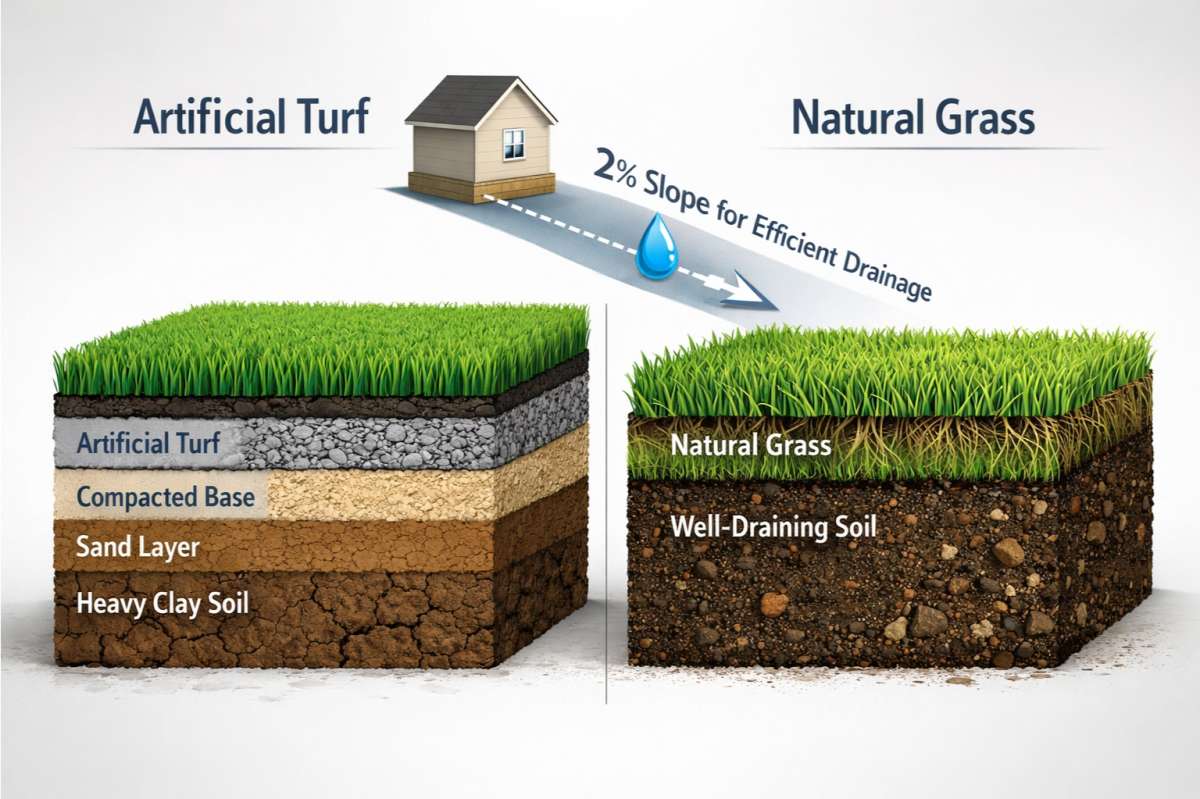
Maintain a 1–2% slope away from buildings
Avoid flat areas where water can pool
Compact the base layer in multiple layers
Even small miscalculations can lead to standing water after heavy rain. A slight slope difference can cause turf bubbling or waterlogging within months.
Professional turf installers, like the team at Certified Turf Pros, plan grading and base compaction carefully to prevent drainage issues and ensure long-lasting performance.
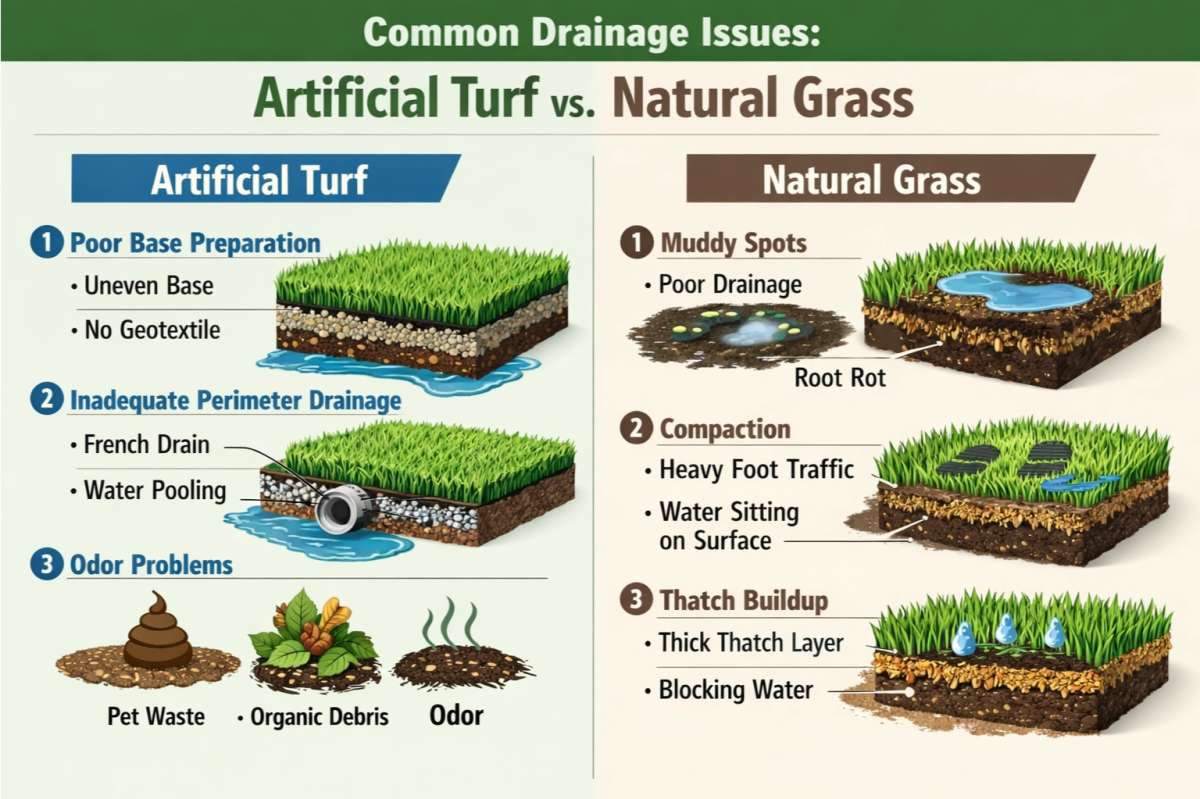
Common Drainage Issues
Poor Base Preparation: Incorrect aggregate size or missing geotextile fabric prevents water from draining evenly.
Inadequate Perimeter Drainage: French drains or trench systems may be needed if water pools along edges.
Odor Problems: Trapped organic matter like pet waste or leaves can produce smells if water isn’t draining properly.
Muddy Spots: Clay-heavy soil retains water, causing soggy patches and root rot.
Compaction from Foot Traffic: Heavy activity compresses soil, preventing water from soaking in.
Thatch Buildup: A thick layer of dead grass can block water absorption; regular dethatching helps.
How to Fix Standing Water
Observe Water Patterns: Track where water collects after rain to identify slope or drainage problems.
Check Perimeter Levels: Ensure edges allow runoff; small trenches can redirect water.
Core Aeration (Natural Grass): Aerate compacted soil and topdress with sand to improve permeability.
Install Channel or French Drain: Subsurface drainage prevents recurring flooding issues.
Lift and Rebuild (Artificial Turf Only): Reconstruct the sub-base correctly, compact layers properly, and check slope with a level.
Preventing Turf Water Issues
Always measure slope accurately
Compact base in layers
Use proper aggregate mix
Install geotextile fabric
Plan water exit routes
Perform annual maintenance
Even artificial turf benefits from occasional washing, debris removal, and outlet checks.
Quick Drainage Tip
A 2% slope ensures water flows away efficiently. Even 1% can work, but lower slopes increase the risk of standing water.
Artificial Turf or Natural Grass?
Heavy clay soil / poor drainage: Artificial turf with an engineered base is a safer choice.
Well-draining soil / enjoy lawn care: Natural grass performs beautifully.
No system lasts if installed poorly — base engineering matters more than the type of grass.
When to Call a Professional
Call an expert if:
Water remains for 24–48 hours
Persistent odors even after washing
Ground feels spongy or uneven
Neighbor runoff enters your property
Foundation walls show dampness
Final Thoughts
Most turf failures aren’t caused by the grass itself — it’s what’s underneath. Spend money on a proper sub-base first, and your visible lawn layer will thrive for years. Proper slope, quality materials, and careful compaction are the keys to long-term success.