

The Role of Project Management in Successful Building Projects
Discover how effective project management ensures on-time, on-budget, and high-quality building projects.

If you’ve ever walked past a building site and wondered why one project runs like a quiet machine while another feels chaotic, the difference usually isn’t the architect or even the contrctor. It’s the project management.
Most people searching this topic are either planning a build, studying construction management, or trying to figure out why their last project went over budget and behind schedule. They want clarity. Not theory. They want to know what project management actually does on a real construction site — and whether it truly makes a measurable difference.
Short answer? It does. More than most realize.
What Is Project Management in Construction — Really?
In simple terms, project management in building projects is the structured coordination of planning, budgeting, scheduling, procurement, quality control, and risk management to deliver a completed structure on time and within cost.
That’s the textbook version.
On site, it’s different. It’s daily problem-solving. It’s anticipating material delays before they stall concrete pours. It’s negotiating with suppliers when steel prices shifts unexpectedly. It’s preventing three subcontractors from working in the same physical space at once.
The Project Management Institute defines project management as the application of knowledge, skills, tools, and techniques to project activities to meet requirements. In construction, those “requirements” include structural integrity, regulatory compliance, cost targets, safety benchmarks, and client expectations — all happening at the same time.
Miss coordination for even a week, and the domino effect is expensive.
Why Building Projects Fail Without Strong Management
Here’s where things get interesting.
In many projects I’ve seen, especially mid-sized commercial builds, the biggest cost overruns didn’t come from design changes. They came from poor coordination. Materials ordered late. Incorrect sequencing. Lack of communication between trades.
The McKinsey & Company published research showing large construction projects often run 20% longer than scheduled and up to 80% over budget. That isn’t because contractors don’t know how to build. It’s because complex systems need disciplined oversight.
Common failure points include:
Scope creep without documentation
Inaccurate cost forecasting
Weak subcontractor coordination
Poor risk planning
Inadequate quality control
What most people miss is that small misalignments early on becomes large financial problems later. A delay in foundation inspection can push framing schedules, which affects roofing, which delays interior trades. And suddenly the labor rates varies depending on rushed timelines. For strategies on improving project coordination and avoiding costly delays, check out Shelters Engineering’s construction management resources.
Planning: The Foundation Before the Foundation
Good project management starts long before ground breaking.
Pre-construction planning includes:
Feasibility analysis
Budget modeling
Site assessment
Risk evaluation
Scheduling frameworks
This is where experienced managers earns their fee. They challenge assumptions. They ask uncomfortable questions. They test the numbers.
For example, in one mixed-use development I consulted on, the initial cost estimate ignored stormwater drainage upgrades required by local authority. That oversight would have added nearly 7% to total project cost. Catching it early changed the financing structure completely.
Planning isn’t paperwork. It’s strategic protection.
The U.S. Bureau of Labor Statistics consistently reports construction managers as essential for cost control and schedule adherence across residential and commercial sectors. That’s not theory — it reflects industry reality.
Budget Control: Where Projects Quietly Collapse
Budget overruns rarely happen in dramatic fashion. They leak slowly.
Material substitutions. Overtime labor. Design clarifications. Small change orders. Each one seems manageable, until they stack.
A strong project manager tracks:
Cost variance
Earned value metrics
Procurement timing
Cash flow projections
And here’s the nuance: cost control isn’t about cutting corners. It’s about informed trade-offs.
I’ve seen clients insist on cheaper flooring materail only to spend double on maintenance within two years. Short-term savings can undermine lifecycle value. Good managers think beyond immediate invoices.
Even a cement quality decision matters more than people assume. If specifications are relaxed without proper engineering review, structural performance can suffer. That risk doesn’t show immediately, but it’s there. For guidance on choosing reliable construction partners who help maintain budget discipline, see what makes a construction company reliable in Lahore.
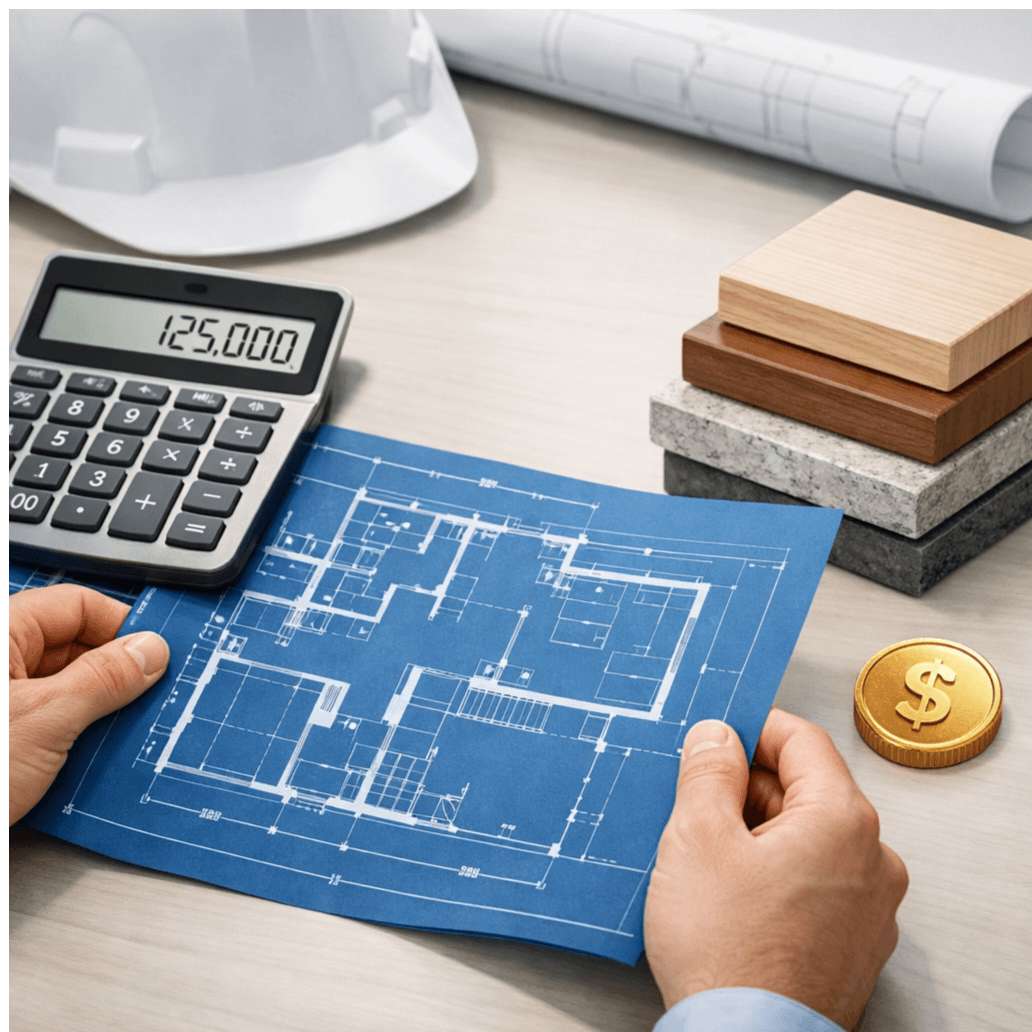
Scheduling: The Invisible Framework Holding Everything Together
A construction schedule isn’t just a calendar.
It’s a logical network of interdependent activities. Excavation must finish before footing inspections. Steel erection must complete before deck pours. Mechanical rough-ins must align with framing.
Professional managers often use critical path method (CPM) scheduling to identify activities that directly affect project duration. Delay one critical task, and the entire timeline shifts.
Here’s a small truth from site experience: trades rarely complains about tight deadlines — they complain about unpredictable ones.
Consistency matters more than aggression. If a schedule is unrealistic from the start, crews lose trust. Productivity dips. Morale follows.
Good project management keeps sequencing realistic, even when clients pushes for acceleration.
Risk Management: Planning for What Might Go Wrong
No construction project runs perfectly. Weather delays. Supply chain disruptions. Permit revisions. Labor shortages.
Risk management isn’t pessimism — it’s preparedness.
Strong managers conduct risk registers early. They rank risks by probability and impact. Then they create mitigation plans.
For example:
Alternative suppliers for steel
Buffer time for inspections
Contingency budgets (typically 5–10% depending on project scale)
The real takeaway is this: unmanaged risk becomes emergency spending. Managed risk becomes controlled adjustment.
The World Economic Forum has repeatedly highlighted supply chain fragility in global infrastructure development. Anyone managing projects in the last few years understands how true that is.
Communication: The Most Underrated Skill
You can have perfect spreadsheets. It won’t matter if communication breaks down.
Project managers act as translators between:
Architects
Engineers
Contractors
Clients
Inspectors
Financial stakeholders
Each group speaks slightly different technical language. Misinterpretation creates rework. Rework destroys margins.
In one residential tower project, HVAC duct placement conflicted with structural beams. It wasn’t a design flaw. It was coordination oversight between drawings revisions. The correction cost six figures and delayed handover by weeks.
Simple weekly coordination meetings, when done properly, prevents this. Not ceremonial meetings — focused alignment sessions.

Quality Control and Compliance
Building codes are not suggestions.
Whether referencing standards from the International Code Council or local municipal regulations, compliance determines occupancy approval.
Quality control processes include:
Material testing
Inspection documentation
Contractor performance reviews
Third-party audits
In some projects I’ve seen, skipping formal documentation during fast-track phases created serious headaches during final inspection. Inspectors require proof. Without it, approvals stalls.
Project management ensures documentation stays organized and audit-ready.
The Financial Perspective: Investor Confidence
Developers and investors don’t just look at design renderings. They look at risk exposure.
Strong project management increases:
Financing approval likelihood
Investor trust
Predictability of ROI
Asset valuation stability
Banks often require detailed project schedules and cost breakdowns before releasing funds. A poorly structured management plan raises red flags fast.
What surprises many clients is that lenders often scrutinize management frameworks as much as architectural plans.
Technology’s Expanding Role
Digital tools changed construction oversight significantly.
Modern managers integrate:
Building Information Modeling (BIM)
Cloud-based scheduling software
Real-time cost tracking systems
Drone-based site monitoring
These tools reduce coordination gaps. But they don’t replace leadership.
Software supports decision-making. It doesn’t make judgement calls when weather ruins a pour schedule or when a subcontractor underperforms.
Experience still matters. Maybe more than ever.
Residential vs Commercial: Different Scales, Same Principles
Whether managing a single-family home or a hospital complex, the core pillars remain:
Scope clarity
Budget control
Time management
Risk mitigation
Quality assurance
The difference is complexity.
Commercial builds involve layered regulatory compliance, larger trade coordination, and more aggressive financing structures. Residential projects may seem simpler but emotional decision-making from homeowners adds a different kind of unpredictability.
Both require disciplined oversight.
What Effective Project Management Looks Like on Site
You’ll recognize it when you see it:
Workers know their schedules
Materials arrive on time
Change orders are documented
Inspections pass without drama
Communication feels structured, not reactive
And yes, problems still arise. They always do. The difference is how fast they’re contained.
Projects without management often feels reactive. Projects with strong leadership feels controlled — even during chaos.
Final Thoughts: Why It Matters More Than People Think
Buildings are physical assets. But construction is a systems process.
Project management is the system that holds cost, time, quality, safety, and communication together. Remove that layer, and complexity overwhelms progress.
In my experience across multiple mid-scale cosntruction projects, strong management doesn’t just save money — it protects reputation. And in development, reputation is currency.
If you’re planning a build, evaluate management capability as seriously as design aesthetics or contractor pricing. The cheapest option up front sometimes cost more later. That pattern repeats often.
The role of project management isn’t administrative. It’s strategic, operational and financial all at once.
And when it’s done right, most people won’t even notice it.