

5 Backpacking Havens for a Kenyan Safari

Backpacking in Kenya is a great way to explore the country on your own terms. It is a great alternative to the mainstream Kenyan Safari, using the best tour companies and people who will guide you. Below you’ll find how backpacking compares with a conventional safari, five havens worth building a route around (two of them on the coast), where to sleep in each, and what to know before you go.
Backpacking vs Normal Safaris
A conventional safari is built around convenience. You see more big games in less time, and you rarely think about logistics. The price reflects that, with lodge itineraries often running to hundreds of dollars per person per night.
While backpacking, you can plan your own route, travel using public transport, sleep in hostels, campsites and guesthouses, visit beaches, markets and everyday life. You spend far less each day, change plans without penalty and meet far more locals. In return you accept more planning, slower journeys, simpler beds and sightings that are less predictable. In short, a normal safari trades money for comfort and near-certain sightings, while backpacking trades comfort for flexibility, savings and daily contact with local life.
You don’t have to choose, though. Many travelers backpack the country and then book a shared, budget-friendly game drive or a few nights at a basic camp near the Mara, which gives them the freedom of the road and the wildlife payoff in one trip.
Best Places for Backpacking in Kenya
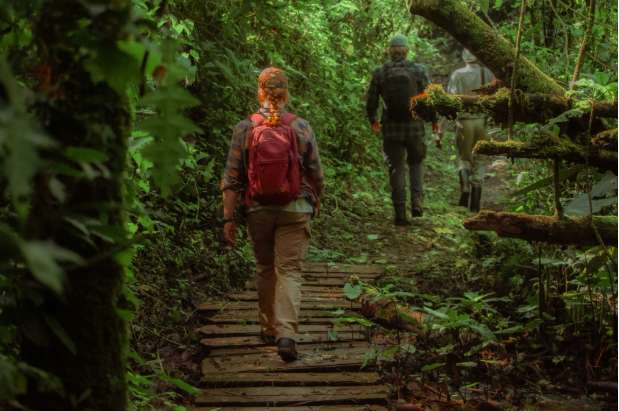
Below are some of the best places to go backpacking in Kenya, including some places to stay while there.
Hell’s Gate National Park and Lake Naivasha
About two hours from Nairobi, Hell’s Gate is one of only a handful of Kenyan parks where you can explore on foot or by bike. Hire a bicycle at the Elsa Gate and pedal past zebras, buffalo, giraffes and warthogs beneath towering red cliffs, then walk the gorge, climb Fischer’s Tower and visit the geothermal areas. Nearby Lake Naivasha adds boat trips to Crescent Island, where you can stroll among grazing wildlife. It’s the cheapest and easiest way to feel like you’re on safari without a vehicle. Non-resident entry was listed at around US$50 per adult at last check, so confirm current fees with Kenya Wildlife Service.
Campers have the most choice here. Kenya Wildlife Service runs campsites inside Hell’s Gate: Naiburta and Oldubai are public sites with water, toilets and a kitchen area that don’t need advance booking, while Endachata is a special campsite where you can reserve ahead. Here, you can bring your own tent, stove and drinking water, because facilities are basic. On the lake shore, budget-friendly camps such as Fisherman’s Camp and Camp Carnelley’s have long catered to backpackers, with space for tents, dorms, simple rooms and cottages. Fisherman’s is the more sociable of the two and can get loud on weekends. If you don’t have gear, many camps rent tents or offer basic cottages, and Naivasha town has inexpensive guesthouses that suit travelers arriving late by matatu.
Africa’s second-highest mountain, at 5,199 meters, rewards trekkers who want more than game drives. Most backpackers aim for Point Lenana, at roughly 4,985 meters, a non-technical summit usually done in three to five days on the Sirimon, Naro Moru or Chogoria routes. Sirimon is often chosen as the gentler ascent, while Chogoria is praised for its tarns, moorland and deep valleys. You’ll need a licensed guide, and your trekking company can arrange porters, huts and camping gear. Expect freezing nights, possible altitude symptoms and views that make every cold step worthwhile.
Before the climb, base yourself in a gateway town such as Nanyuki or Naro Moru, where budget guesthouses and basic lodges are easy to find and where you can arrange guides, porters and gear. On the mountain, you sleep in simple huts and campsites along the route. Common stops include Old Moses Camp on the Sirimon route, Shipton’s Camp in the high valleys and Austrian Hut near the summit approach. If you descend the Chogoria route, Meru Mount Kenya Bandas near the Chogoria gate offer simple wooden huts and camping. Book huts or camping through your guiding company, and bring a warm sleeping bag, because nights are freezing even when days are sunny.
The Mara is Kenya’s signature wildlife destination, and backpackers can enjoy it without lodge prices. Base yourself in a budget camp near the Sekenani or Talek gates, join a shared game drive and split vehicle costs with other travelers. Between roughly July and October the Great Migration brings wildebeest to the Mara River, and the crossings are among the most dramatic wildlife spectacles anywhere. Park fees are significant, so build them into your budget, and choose operators that treat local communities and wildlife with respect.
Small towns and settlements near gates such as Sekenani and Talek have budget camps, simple guesthouses and basic tented camps, many of which can arrange shared game drives. Mara Explorers Camp Backpackers, just outside Sekenani gate, offers camping, dome tents and en-suite cottages, and Greenwood Safari Camp near Talek gate is another budget-friendly choice. Some camps sit inside community conservancies, which usually cost more but offer quieter wildlife viewing and support local landowners. Camping inside the reserve itself is only allowed at designated sites and generally needs advance booking. Confirm what’s included, such as meals, transfers and park fees, before you pay a deposit.
On the northern coast, Lamu’s old town is a UNESCO World Heritage Site where cars are essentially absent. Donkeys carry loads along narrow alleys, dhows drift across the channel and carved wooden doors line the streets. Spend your days sailing, eating fresh seafood, walking to Shela Beach and watching the sunset from a rooftop. Flying from Nairobi or Mombasa is the simplest way to reach it, and the mainland roads leading to the coast are often advised against, so check your government’s travel advice for the Lamu area before you go.
In Lamu Town, many budget guesthouses occupy restored Swahili houses with rooftop terraces, fans or air conditioning, and breakfast included, and you’ll be steps from the waterfront and market. Jambohouse is one long-running budget option listed on Hostelworld. Shela is quieter and closer to the beach, with a mix of simple guesthouses and pricier options, so book early in peak season. Because the island has no cars, pack light and expect to walk, or pay a donkey handler to carry your bag. Ask whether your room has a mosquito net and backup power for outages.
About 60 kilometers north of Mombasa, Kilifi is a laid-back creekside town that’s easy to reach and easy to settle into. Swim and snorkel at Bofa Beach, watch the sunset from a traditional dhow and, with luck, swim in the glowing bioluminescence of Kilifi Creek. The nearby Mnarani ruins add a touch of history. Reach town by matatu or bus from Mombasa, then take a boda-boda or tuk-tuk for the last stretch.
The best-known backpacker base is Distant Relatives Ecolodge & Backpackers, on Kilifi Creek about three kilometers outside town and surrounded by community forest. It offers dorms, tents, bandas and private rooms, plus a pool, a restaurant and a social atmosphere with regular live music and yoga, and it’s a short boda-boda ride from Bofa Beach. Book ahead in the December holiday season, when the coast fills up. If the lodge is full, ask locally about simple guesthouses in Kilifi town, and use boda-bodas and tuk-tuks to get around.
Diani has the widest range of budget stays on the coast. Hostels such as Diani Backpackers, Galu Backpackers & Ecolodge and Stilts Backpackers offer dorm beds and private rooms, and you’ll find more along Diani Beach Road and in nearby Ukunda, as well as simple guesthouses and self-catering apartments that become good value when split between friends. Staying slightly back from the beach usually lowers the price, and most places are a short walk or tuk-tuk ride from the sand. Many hostels can arrange snorkeling trips to Kisite-Mpunguti and kitesurfing lessons, so ask at check-in before booking tours elsewhere.
Diani has the widest range of budget stays on the coast. Hostels such as Diani Backpackers, Galu Backpackers & Ecolodge and Stilts Backpackers offer dorm beds and private rooms, and you’ll find more along Diani Beach Road and in nearby Ukunda, as well as simple guesthouses and self-catering apartments that become good value when split between friends. Staying slightly back from the beach usually lowers the price, and most places are a short walk or tuk-tuk ride from the sand. Many hostels can arrange snorkeling trips to Kisite-Mpunguti and kitesurfing lessons, so ask at check-in before booking tours elsewhere.
Things to Keep in Mind While Backpacking in Kenya
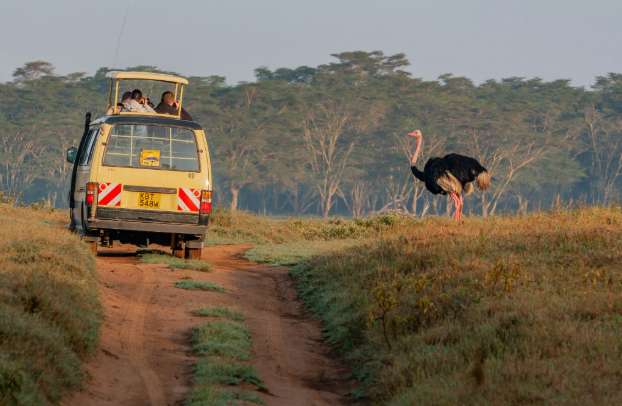
Most visitors need an electronic travel authorization before arriving, so apply online through the official portal well ahead of your flight. Check whether you need proof of yellow fever vaccination, especially if you’re arriving from a country where the disease occurs.
While backpacking, you need to pick your season. The drier months, roughly June to October and January to February, are best for wildlife and hiking. The long rains from March to May can make roads muddy and some coastal camps quiet, though they also bring lower prices and green landscapes.
When traveling, handle money wisely. M-Pesa mobile money is everywhere and many local vendors prefer it. Carry cash for rural areas and small guesthouses, especially on Lamu where ATMs are limited, and keep small notes for tips, snacks and transport. National park fees are often paid electronically, so confirm the current system before you arrive.
When it comes to packing your backpack, bring layers, because Nairobi and the highlands get cold at night, plus a rain shell, sturdy shoes, sun protection, a headlamp, a power bank and a Type G plug adapter. A refillable water bottle with a filter will save money and plastic.
Lastly, respect local culture. Greet people with a friendly “Jambo” or “Habari,” or even less touristy “Niaje” or “Sema” and learn a few Swahili words such as “asante” for thank you. Dress modestly in coastal towns like Lamu, which is predominantly Muslim, ask before photographing people, and haggle politely at markets. Choose community experiences that are run by locals and pay fairly.
Safety Precautions for When You’re Backpacking in Kenya
Kenya is welcoming, and millions of travelers visit safely each year, but backpackers benefit from a few smart habits.
Watch your belongings in cities. Petty theft, including phone snatching, happens in busy parts of Nairobi and Mombasa. Keep your phone out of sight on the street, avoid flashy jewelry and carry only what you need. At night, use a ride-hailing app or a trusted taxi instead of walking.
Avoid traveling after dark. Road conditions, unlit vehicles and fatigue make night driving risky. Choose reputable bus companies, wear a seat belt where one exists, and arrive in new towns during daylight so you can find your accommodation easily.
Respect wildlife. Animals are wild, even in friendly-looking places. Never walk in parks where it isn’t permitted, follow rangers’ instructions, keep a safe distance and don’t feed animals. Near lakes, remember that hippos leave the water at night and can be dangerous. Camp only in designated sites and keep food locked away.
Check travel advisories. Some areas near the Somali border and parts of the northeastern and northern coastal mainland, including the road approaches to Lamu, carry government warnings. Read current advice from your embassy before booking, and adjust your route if conditions change.
Take care in the water. Swim where locals swim, ask about currents and tides, and avoid swimming alone or after drinking. On the coast, keep valuables off the beach while you’re in the water.
Protect your health. Speak to a travel clinic about malaria prevention, routine vaccines and anything recommended for your route. Sleep under a net where needed, use repellent, drink filtered or bottled water and take altitude seriously on Mount Kenya by climbing slowly and descending if symptoms worsen. Good travel insurance that covers hiking and medical evacuation is essential.
Beware of scams. Use official park gates, ask to see identification for guides and confirm prices before you commit. If an offer sounds too good to be true, or someone pressures you for money, walk away politely.
Stay connected. Buy a local SIM card, share your itinerary with someone at home and check in regularly. Solo travelers, especially women, should read recent hostel reviews, trust their instincts and keep emergency numbers saved offline.
Final Thoughts
Backpacking Kenya isn’t the easiest way to see the country, but it may be the most rewarding. You’ll be travelling on your own terms and interacting with your local communities. However, if you would like to get some help with your hotel bookings, check out travel companies like Pega Tours to help you on your backpacking adventure.