

Is 12 Days Enough for the Everest Base Camp Trek? What Trekkers Should Know
What to expect from the journey, from Lukla to the foot of Everest
Everest Base Camp

The Everest Base Camp trek is one of Nepal's most recognizable Himalayan adventures. It takes trekkers through traditional Sherpa settlements, across suspension bridges, past Buddhist monasteries, and into the dramatic mountain landscape of the Khumbu region.
For many travelers, however, the biggest challenge is not deciding whether to go. It is finding enough time.
A traditional Everest Base Camp itinerary often takes around two weeks or longer, but shorter itineraries are also available. A 12-day trek can be an option for travelers with limited holiday time who still want to reach Everest Base Camp and experience the high Himalayas.
But is 12 days really enough? What does the journey involve, and what should you consider before choosing a shorter itinerary?
Here is what to know before planning your trek.
Yes, a 12-day itinerary can take you from Kathmandu to Everest Base Camp and back with a carefully planned route and acclimatization schedule.
The journey follows the classic Khumbu trail through Lukla, Phakding, Namche Bazaar, Tengboche, Dingboche, Lobuche, and Gorak Shep. After visiting Everest Base Camp, you'll hike to Kala Patthar the following morning before descending towards Lukla.
However, a shorter itinerary means longer walking days, significant altitude gains, and limited flexibility for weather or flight delays. It is best suited to physically prepared travelers who understand the demands of high-altitude trekking.
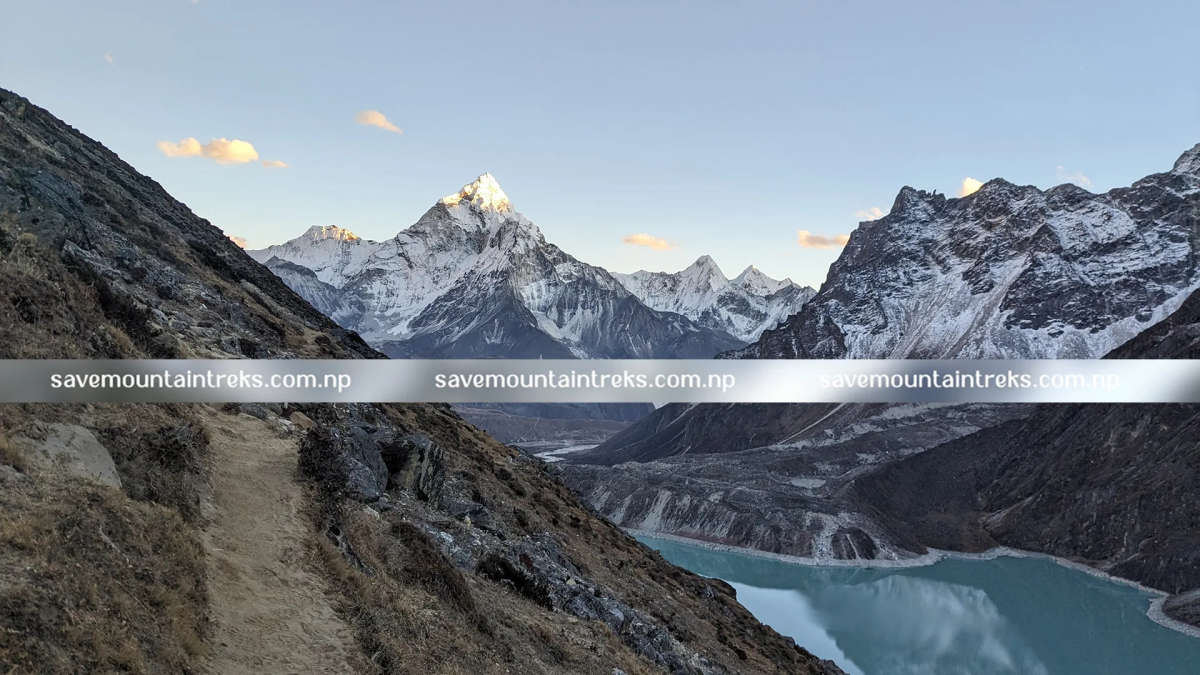 Everest Base Camp (credit: savemountaintreks.com.np)
Although the exact schedule can vary, a typical 12-day journey follows this route:
Day 1: Kathmandu to Lukla and trek to Phakding
The adventure begins with a scenic mountain flight to Lukla, followed by a walk through the Dudh Koshi Valley to Phakding. Depending on flight operations and weather, flights may operate from Kathmandu or from Manthali Airport in Ramechhap.
Day 2: Phakding to Namche Bazaar
The trail follows the river, crosses suspension bridges, and passes through small settlements before climbing towards Namche Bazaar, the main trading town of the Khumbu region.
Day 3: Acclimatization in Namche Bazaar
A rest and acclimatization day helps your body adjust to the increasing elevation. Trekkers can explore the town and take a short hike towards viewpoints around Namche, depending on their condition and their guide's assessment.
Day 4: Namche Bazaar to Tengboche
The trail climbs and descends through forested hillsides before reaching Tengboche. The village is known for its monastery and impressive mountain surroundings.
Day 5: Tengboche to Dingboche
As the trail moves higher into the Khumbu, the landscape becomes more open and alpine. Dingboche is an important stop before continuing towards the higher sections of the route.
Day 6: Acclimatization in Dingboche
Another acclimatization day is scheduled here. A short hike towards Nangkartshang Hill may be included if weather and health conditions permit.
Day 7: Dingboche to Lobuche
The route gradually climbs towards the higher valley, passing the Thukla area and memorials dedicated to climbers who lost their lives in the Everest region.
Day 8: Lobuche to Gorak Shep and Everest Base Camp
This is one of the most demanding days. After reaching Gorak Shep, trekkers continue towards Everest Base Camp beside the Khumbu Glacier before returning to Gorak Shep for the night.
Day 9: Kala Patthar and descent to Pheriche
An early-morning ascent to Kala Patthar is planned for panoramic views of Everest and surrounding peaks. Afterward, the route descends towards Pheriche. The Kala Patthar hike may need to be skipped if health, weather, or trail conditions make it unsuitable.
Day 10: Pheriche to Namche Bazaar
The return journey continues through the familiar Khumbu trail, descending to Namche Bazaar.
Day 11: Namche Bazaar to Lukla
The final trekking day follows the trail back towards Lukla, where trekkers prepare for their return flight.
Day 12: Lukla to Kathmandu
The trek concludes with a flight back to Kathmandu, either directly or via Ramechhap/Manthali when flight operations require it.
Walking times and the daily schedule can change with weather, trail conditions, group pace, and individual fitness.
The Everest Base Camp trek is a demanding high-altitude trek, even though it does not require technical climbing skills.
You should expect several consecutive days of walking, steep uphill and downhill sections, rocky trails, cold nights, and basic accommodation at higher elevations.
The most challenging part of a shorter itinerary is often the combination of long walking days and limited time for recovery.
The overnight elevation also increases considerably along the route. Trekkers eventually sleep at Gorak Shep, approximately 5,164 metres above sea level.
Previous trekking experience can be helpful, but it does not guarantee that someone will adjust well to high altitude. Physical fitness is important, yet altitude illness can affect anyone.
Preparing several weeks before departure can make the journey more manageable. Regular hiking, uphill walking, stair climbing, cardio exercise, and leg-strengthening activities can help build endurance.
Most accommodation on the Everest Base Camp trail is in teahouses or mountain lodges.
These establishments generally provide simple rooms, usually with twin beds and basic furnishings. Dining areas are often communal, giving trekkers a place to eat, relax, and meet other travelers.
Facilities become more basic as you gain altitude. Hot showers, charging facilities, and Wi-Fi may be available in some places, often for an additional charge, but availability and reliability vary.
At higher elevations, nights can be particularly cold, so a suitable sleeping bag and warm clothing are important.
Teahouse trekking is part of the experience. You do not need to carry camping equipment, but you should be prepared for simple accommodation and changing comfort levels along the trail.
A 12-day itinerary may be suitable for travelers who:
Have limited holiday time but want to visit Everest Base Camp.
Are physically fit and comfortable with consecutive days of challenging walking.
Have prepared for high-altitude trekking and understand the associated risks.
Are comfortable with basic teahouse accommodation.
Understand that reaching Everest Base Camp and Kala Patthar depends on health, weather, and trail conditions.
It may be less suitable for first-time high-altitude trekkers who want a slower pace, additional rest days, or more flexibility.
If you prefer a more gradual ascent, a longer itinerary may be a better choice. More time can provide additional flexibility, although no itinerary can completely remove the risks associated with altitude.
A 12-day Everest Base Camp trek can be a memorable way to experience the Khumbu region when your holiday schedule is limited. It includes the major highlights of the route, from Sherpa villages and Tengboche Monastery to Everest Base Camp and the planned Kala Patthar viewpoint.
However, the shorter schedule comes with trade-offs. Walking days can be demanding, the altitude is significant, and there is little spare time for unexpected delays.
Before choosing an itinerary, consider your fitness, previous trekking experience, available time, and comfort with high-altitude conditions. A well-planned journey should always leave room for your guide to make decisions based on safety.